When Every Minute Counts: Your Guide to Emergency and Same-Day Dental Care
09/01/2026 15:52
14/08/2026 11:08
- Distinguishing Between Urgent and Non-Urgent Care
- What Constitutes a True Dental Emergency?
- What Can Usually Wait a Few Days?
- The Physiology of a Toothache: Why Waiting Isn't an Option
- First Aid: What to Do Before You Reach the Clinic
- The Role of Technology in Emergency Dentistry
- Overcoming the Fear Factor
- Prevention: The Best Form of Protection
- Restoring Your Smile and Peace of Mind
Dental emergencies often happen when you least expect them. It could be a throbbing toothache in the middle of the night, a chipped tooth during a soccer game, or a lost filling before an important meeting. Dental problems usually don’t get better on their own, and ignoring early signs can lead to more pain and costly treatments later.
Knowing what counts as a dental emergency and that same-day care is available can help ease your worries. Acting quickly is not just about stopping pain; it can save your teeth, prevent infection, and protect your health. This guide will help you handle dental emergencies with confidence.
Distinguishing Between Urgent and Non-Urgent Care
Many people wonder whether they need to see a dentist right away or can wait for a regular appointment. While any mouth pain is a concern, not every situation is an emergency. Still, it’s usually safest to be cautious.
What Constitutes a True Dental Emergency?
Generally, a dental emergency involves one of three critical factors: uncontrolled bleeding, severe pain that cannot be managed with over-the-counter medication, or facial trauma that threatens the structure of a tooth or the jaw.
- Severe Toothache: Pain is your body’s warning sign. If you have ongoing, sharp, or throbbing pain, it could mean there’s an infection or an abscess in your tooth.
- Knocked-Out (Avulsed) Tooth: This is the highest level of emergency. There is a very narrow window of time (often less than an hour) in which the tooth can be successfully re-implanted.
- Dental Abscess: If you notice a pimple-like bump on your gum, along with fever or a bad taste in your mouth, it could be a severe infection. If not treated, it can spread to your jaw, neck, or even your brain.
- Loose or Misaligned Teeth: If a permanent tooth feels loose without an apparent injury, or if an impact has moved a tooth out of position, immediate stabilization is required.
What Can Usually Wait a Few Days?
Problems like a painless chipped tooth, a lost crown that isn’t sensitive, or mild gum irritation should still be checked by a dentist, but they don’t always need same-day care. Still, book the next available appointment, don’t put it off for months.
The Physiology of a Toothache: Why Waiting Isn't an Option
To see why emergency care matters, it helps to know a bit about your teeth. The outer enamel is the hardest part of your body. Underneath is more sensitive dentin. At the center is the pulp, which contains the nerves and blood vessels.
When bacteria breach the enamel and dentin to reach the pulp, irreversible pulpitis, inflammation of the nerve, results, because the tooth is a rigid structure, there is no room for the swelling that accompanies inflammation. This internal pressure causes the excruciating pain associated with dental emergencies. If the pressure isn't relieved by a root canal or extraction, the infection exits the root tip and begins to eat away at the jawbone, forming an abscess.
Same-day dental care stops this process. By treating the infection or sealing a crack right away, dentists can prevent tooth loss.
First Aid: What to Do Before You Reach the Clinic
Professional care is essential, but what you do right after an injury or when pain starts can make a big difference. Here are some first-aid tips for common dental emergencies:
1. Handling a Knocked-Out Tooth: Time is critical. Pick the tooth up by the crown (the chewing surface), never by the root. If the root is dirty, rinse it gently with milk or water for a second, but do not scrub it or remove any attached tissue fragments. If possible, place the tooth back into the socket and gently bite down on clean gauze/cloth to hold it in place. If you cannot reinsert it, keep the tooth moist by placing it in a container of milk or your own saliva. Water is not ideal for storage as it can damage the root cells. Get to a dentist immediately.
2. Managing Severe Toothache: Rinse your mouth with warm salt water. Use dental floss to remove anything stuck between your teeth gently. If your cheek is swollen, apply a cold compress. Necessary: Never put aspirin or painkillers directly on your gums; they can cause severe burns.
3. Dealing with a Broken or Chipped Tooth: Save an3. Dealing with a Broken or Chipped Tooth: Save any pieces of the tooth you find. Rinse your mouth with warm water if there’s bleeding, and press gauze on the area. Use a cold compress on your cheek to help with swelling and pain until you see the dentist. Same-day dental care is designed to triage and stabilize. When you arrive at a clinic for an emergency, the workflow differs slightly from a routine check-up. The primary goal is palliative care, relieving pain and addressing immediate danger.
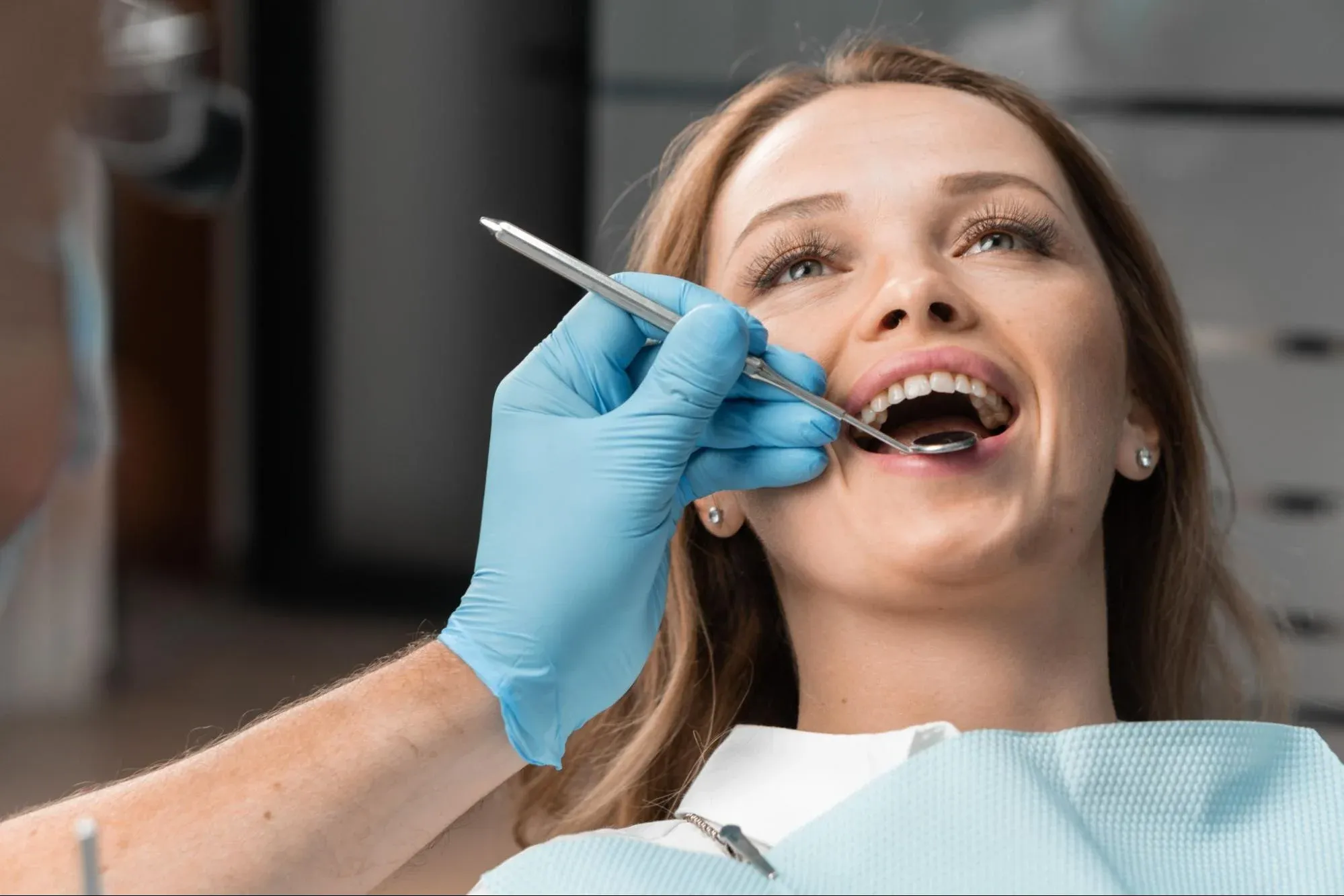
Upon arrival, diagnostic imaging (X-rays or 3D scans) is prioritized to see what is happening below the gum line. Once the dentist diagnoses the issue, be it a fracture, an infection, or trauma, they will explain the immediate options.
Sometimes, the treatment can be completed in one sitting (e.g., re-cementing a crown or a simple extraction). In other cases, such as a severe infection, the dentist may drain the abscess, prescribe antibiotics, and place a temporary filling, then schedule you to return for the final root canal or restoration once the inflammation has subsided. This two-step process ensures the definitive treatment is performed under optimal conditions and that you leave the clinic pain-free.
The Role of Technology in Emergency Dentistry
New technology has made it much faster to handle dental emergencies. Digital X-rays provide instant images with less radiation, allowing dentists to make quick decisions in urgent cases. Intraoral cameras let you see exactly what the dentist sees, making it easier to understand why treatment is needed.
Some dental offices use CAD/CAM technology to fabricate permanent ceramic crowns in a single visit. This is especially helpful if you break a front tooth and need a quick, natural-looking fix so you can get back to your routine without feeling self-conscious.
Overcoming the Fear Factor
A significant number of dental emergencies are exacerbated by dental anxiety. Patients often endure low-level pain for weeks, hoping it will vanish, simply because they fear the dentist's chair. By the time they seek same-day care, the problem has escalated.
It is important to remember that modern emergency dentistry is centered on patient comfort. Anesthetics are more effective than ever, and sedation options are frequently available for high-anxiety patients. Dentists approaching an emergency case are trained to be empathetic; they understand the patient is in distress and vulnerable. The environment is one of support, not judgment. Never let embarrassment about the state of your teeth prevent you from seeking urgent help. Dentists have seen it all and are there to heal, not to lecture.
Prevention: The Best Form of Protection
Accidents can happen, but many dental emergencies result from long-term neglect. A cavity that’s been growing for years may not hurt until suddenly it becomes a real emergency.
- Regular Check-ups: Visiting your dentist every six months allows them to spot micro-fractures, failing fillings, and early decay before they turn into midnight toothaches.
- Mouthguards: If you or your kids play contact sports like basketball, football, or martial arts, wearing a custom mouthguard is the best way to prevent dental injuries.
- Dietary Habits: Don’t chew on ice, popcorn kernels, or hard candies, as these can easily crack your teeth.
Restoring Your Smile and Peace of Mind
Dental emergencies can be stressful and upsetting. But if you know the warning signs and act quickly, you can take control of the situation. Don’t wait—sometimes, saving a tooth depends on getting help within hours. You are dealing with a sudden injury or the culmination of a long-standing issue; prioritizing immediate care is the ultimate act of self-care. By seeking help promptly, you not only alleviate pain but also preserve the structural integrity and aesthetics of your smile for years to come. For those seeking comprehensive and responsive care in such critical moments, İstinye University Dental Hospital stands ready to provide expert diagnosis and treatment, ensuring your dental health is restored with the highest medical standards.

- Suggestion
- Request
- Complaint