Building a Lifetime of Smiles: The Essential Oral Care Guide for Parents of Children Aged 0 to 6
12/01/2026 17:53
14/08/2026 10:50
Parenthood is full of milestones: the first smile, the first step, the first word. Among these special moments, the arrival of the first tooth is just as important, even if it gets less attention.
Many parents don’t realize that dental care starts before the first tooth appears. Some think baby teeth don’t matter much since they fall out, but that’s not true. Healthy baby teeth are important for lifelong oral health. They keep space for adult teeth, help with speech, and if they get infected, they can harm the permanent teeth growing underneath.
Let’s be honest: brushing a two-year-old’s teeth can be a real challenge. It’s one thing to know what to do, but getting your toddler to cooperate is something else entirely.
This guide is here to help. We’ve divided the 0-6 age range into clear stages and offer practical, science-based tips on hygiene tools, how much toothpaste to use, what foods to watch out for, and ways to make brushing a positive part of your daily routine.
Stage 1: The Pre-Tooth Era (0-6 Months)
The Goal: Establishing a clean environment and getting the baby used to oral manipulation.
Even before teeth appear, the mouth is home to bacteria. Sugars from breast milk or formula can cling to the gums and tongue.
- The Routine: You don't need a brush yet. Once a day (preferably during bath time), wrap a clean, damp washcloth or a sterile gauze pad around your finger. Gently wipe the baby’s gums, inside of the cheeks, and tongue.
- The Benefit: This removes sticky residue and helps your baby get used to having your finger in their mouth, making it feel normal and not scary.
- Teething Trouble: Around 4 to 6 months, babies may start drooling and become irritable. You can help by offering a chilled (not frozen) teething ring or gently massaging their gums with your finger.
Stage 2: The First Eruption (6-12 Months)
The Goal: Protecting the new arrivals and preventing "Bottle Rot."
Usually, the lower front teeth appear first. This signals the start of "real" brushing.
- The Tool: Switch to a silicone finger brush or a tiny, soft-bristled infant toothbrush.
- The Paste: Use a "Smear" (Grain of Rice) amount of fluoride toothpaste.
Note: Experts now recommend using fluoride toothpaste as soon as the first tooth appears, but only in a tiny amount. This small amount is safe if swallowed.
- The Technique: Brush your baby’s teeth twice a day, paying special attention to where the tooth meets the gum.
CRITICAL WARNING: The Nighttime Bottle. This is the single most significant risk factor for this age group. Never put a baby to sleep with a bottle of milk or juice. When a baby sleeps, saliva production stops. If milk pools around the teeth all night, the natural sugars feed bacteria, causing rapid, severe decay known as "Early Childhood Caries" or "Baby Bottle Tooth Decay." If they need a bottle to soothe, fill it with water only.
Stage 3: The Toddler Years (1-3 Years)
The Goal: Establishing routine amidst resistance.
This stage can be the hardest. Your child wants to do things on their own (“I do it!”) but doesn’t yet have the skills to brush well.
- The Tool: A colorful children's toothbrush with a thick handle for better grip.
- The Paste: Continue with the "Smear" (Grain of Rice) size until age 3.
- The Strategy: Knee-to-Knee Brushing. If your child resists, try sitting on the floor or bed with your partner, knees touching. Lay your child down with their head in your lap and their legs around your partner’s waist. This position helps you see their mouth clearly and keeps them comfortable and steady.
- The Rule: Let your child brush first for fun, but always finish the job yourself. Toddlers aren’t able to clean their teeth properly on their own.
Stage 4: The Preschool Years (3-6 Years)
The Goal: Refining skills and introducing flossing.
By age three, most kids have all 20 baby teeth and can spit out toothpaste, so the routine changes a bit.
- The Paste: Now you can use a pea-sized amount of fluoride toothpaste. Teach your child to spit out the toothpaste but not rinse, since a little leftover toothpaste helps strengthen their enamel.
- Flossing: Once the back teeth touch each other (closing the gaps), a toothbrush can no longer reach between them. This is where cavities hide. You must start flossing for them once a day (usually at bedtime). Floss picks (little handles) are much easier for parents to use on kids than string floss.
- The "Rule of 8": Kids can’t brush thoroughly by themselves until they can tie their shoes or write in cursive, usually around age 7 or 8. Until then, parents need to supervise and help finish the brushing.
The Diet: Beware of the "Grazer"
At this age, what your child eats is just as important as how they brush. How often they have sugar matters more than how much they eat at once.
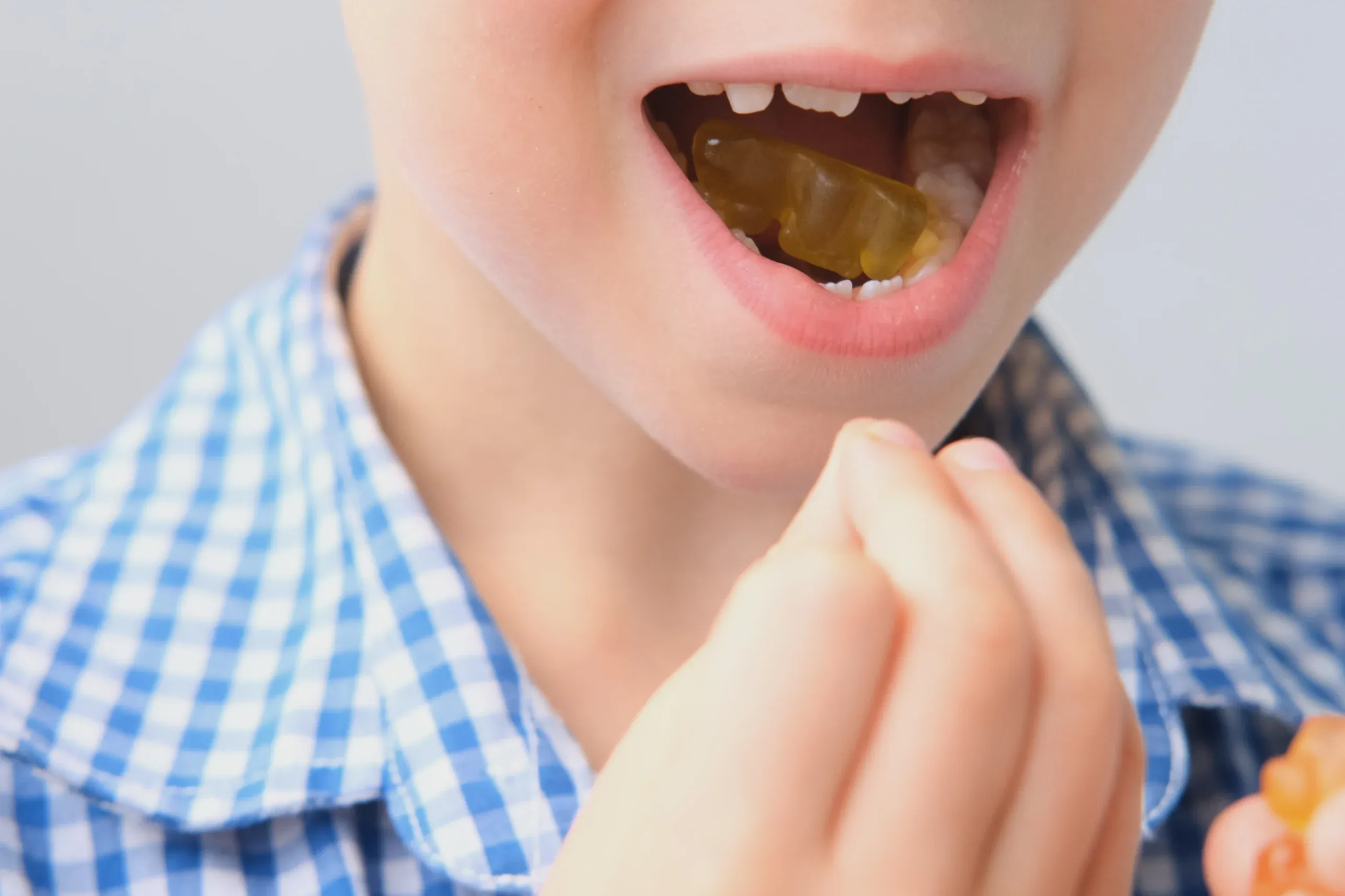
- The Acid Attack: Each time your child eats a cracker, a gummy bear, or drinks juice, bacteria in the mouth make acid for about 20 minutes.
- Grazing: If your child sips juice or snacks on crackers throughout the day, their teeth are exposed to acid almost all the time.
- The Solution: Try to have three main meals and two planned snack times each day. Offer only water between meals, and avoid sticky snacks like gummies or dried fruit that stay on the teeth for a long time.
Breaking Habits: Thumb Sucking and Pacifiers
Sucking is a normal reflex for young children, but over time it can change the shape of the jaw as it grows.
- Age 0-2: Perfectly normal. No need to intervene.
- Age 2-4: Start gentle encouragement to stop.
- Age 4+: If your child still sucks their thumb or uses a pacifier as permanent teeth start to come in, it can cause an "Open Bite" (where the front teeth don’t touch) or a narrow roof of the mouth. At this point, your Pedodontist may recommend treatment or special devices.
Making it Fun: Psychology Tricks
If brushing is a battle, change the game.
-
Music: Play a 2-minute song. They have to brush until the music stops.
-
Characters: Let them choose their own toothbrush (Frozen, Spiderman, etc.).
-
Reward Charts: Give your child a sticker for every morning and night they brush. When the chart is full, they can earn a small reward.
-
Modeling: Brush your teeth together. Children mimic what they see.
A Partnership for Health
Caring for your child’s teeth from birth to age six is a big responsibility and takes steady effort. But you don’t have to do it alone.
The idea of a "Dental Home" means your Pedodontist is your partner. We help track your child’s growth, spot early signs of tooth decay, and offer professional fluoride treatments to protect their enamel.
At İstinye University Dental Hospital, our Pedodontics Department is dedicated to educating families. We believe that an empowered parent is the best dentist a child can have. By following these age-appropriate guides, you are giving your child a gift more valuable than any toy: a foundation of health and a smile they will carry proudly into adulthood.