The Third Dimension: How 3D Jaw Scans (CBCT) Remove Uncertainty in Dentistry
12/01/2026 02:07
21/08/2026 14:11
Imagine trying to figure out the shape of a statue just by looking at its shadow on the wall. You can see its height and width, but you can’t tell how deep it is. You wouldn’t know if the nose sticks out or if the statue is hollow or solid. That missing detail is important.
For more than a hundred years, dentists used this "shadow" method. Traditional dental X-rays, like periapical and panoramic images, show flat pictures of 3D objects. They work well for basic checks, but they flatten the jaw’s complex shape into one layer. This causes structures to overlap, creates distortion, and hides important details like bone thickness.
When dental procedures are complicated, not having this information can mean the difference between success and failure.
That’s where 3D Jaw Analysis, or Cone Beam Computed Tomography (CBCT), comes in. This technology has changed dental diagnostics from guesswork to precision. It lets us look at the jawbone from any angle and creates a virtual model of your anatomy.
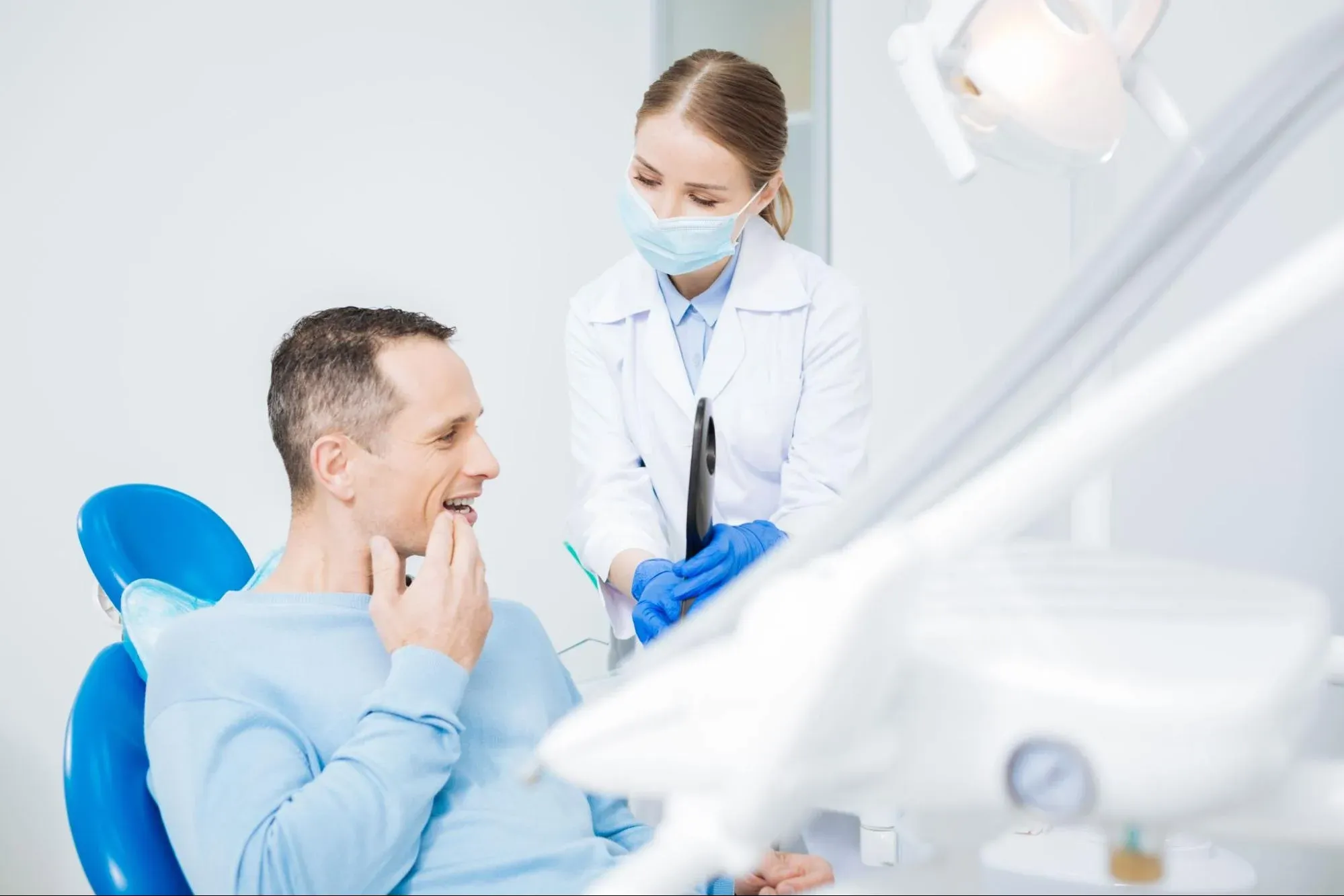
If your dentist suggests a "Tomography" scan, it might sound confusing or even unnecessary. This guide will show you why this technology is important for safe treatment, how it’s different from hospital CT scans, and how it helps your dentist work with greater accuracy.
What is CBCT (Dental Tomography)?
It’s important to know that Dental Tomography (CBCT) is not the same as the large Medical CT scanners you see in hospitals.
-
Medical CT (Fan Beam): You lie down inside a tunnel-shaped machine. The scan takes several minutes and covers your whole body or head, using a higher dose of radiation. It’s mainly used to look at soft tissues like the brain or liver.
-
Dental CBCT (Cone Beam): You sit or stand in an open chair while the machine circles your head once. It uses a cone-shaped X-ray beam to take pictures of your teeth and bones in just 10 to 20 seconds.
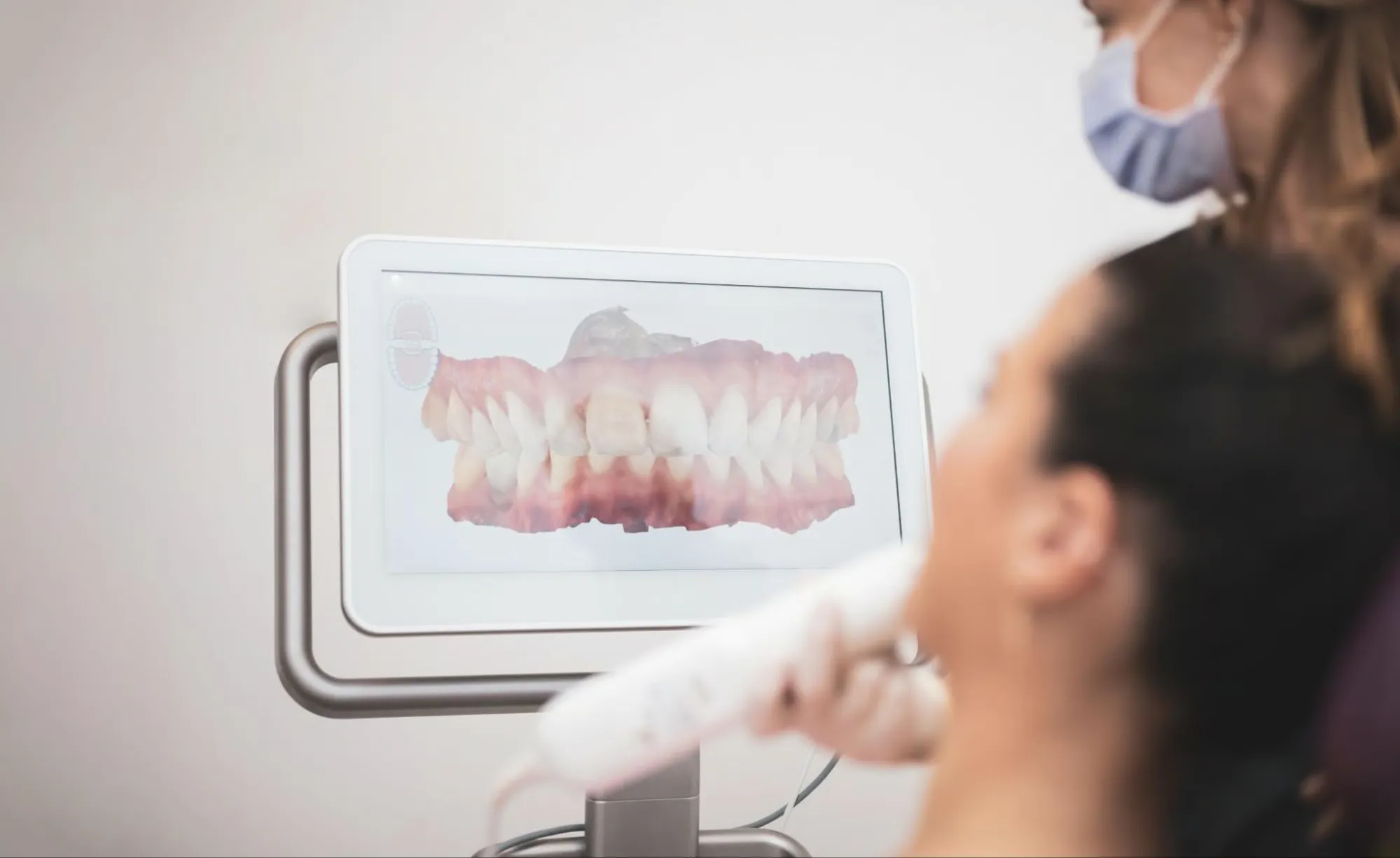
The result is a clear 3D image that your dentist can view and move around on a computer. We can look inside nerve canals, see between roots, and measure bone density with exact accuracy.
The "Why": When is 2D Not Enough?
We don't use 3D scans for simple check-ups. They are reserved for cases where precision is non-negotiable.
1. Implant Planning (The Gold Standard) Placing a dental implant isn’t just about putting a post into the bone; it’s about making sure it’s in exactly the right spot.
-
Bone Volume: A 2D X-ray shows how tall the bone is, but not how wide. On a regular X-ray, the jawbone might seem tall enough, but a 3D scan could show it’s actually very thin. Without this information, an implant could go through the bone by mistake.
-
Nerve Protection: The lower jaw contains the Inferior Alveolar Nerve, which lets you feel your lip. A 3D scan shows exactly where this nerve is, so the surgeon can pick an implant that stops safely above it and avoids causing numbness.
2. Impacted Wisdom Teeth. Wisdom teeth often grow in odd directions, and their roots can wrap around the main jaw nerve. On a 2D X-ray, it might seem like the root touches the nerve, but we can’t be certain. A 3D scan shows exactly how close they are. Sometimes, it reveals the nerve is actually a few millimeters away from the root. This helps the surgeon work confidently or adjust the plan to avoid injury.
3. Endodontics (Root Canals) Some teeth have complicated root systems with hidden canals, such as the MB2 canal in molars, that don’t show up on regular X-rays. If a root canal doesn’t work, a 3D scan can help find a missed canal or a tiny vertical root fracture, which can be thinner than a hair.
4. Pathology (Cysts and Tumors) If we find a lesion in the jaw, it’s important to know its exact size and shape. Is it wearing away the sinus floor? Is it spreading into the nose? 3D scans show the precise edges of cysts, so they can be removed completely without harming nearby healthy tissue.
The Procedure: What to Expect
Getting a 3D scan is actually simpler than having a regular panoramic X-ray.
-
Preparation: Remove metal objects (earrings, necklaces, hairpins, glasses) from the head and neck area, as they can create "scatter" or white streaks in the image.
-
Positioning: You’ll stand or sit in the machine and gently bite on a plastic tab. This keeps your teeth apart and steady during the scan.
-
The Scan: The machine’s arm moves around your head and makes a soft whirring sound. The scan takes about 15 seconds, and you won’t feel a thing.
-
The Result: The images are ready on the computer right away.
There’s no feeling of being closed in, no injections, and no need for any dye or contrast material.
Radiation Safety: Low Dose Technology
Many patients worry about radiation and ask, "Is it safe?" A CBCT scan does use more radiation than a single-tooth X-ray, but much less than a medical CT scan—often 10 to 30 times less. Modern machines use Pulsed Exposure, so the X-ray beam turns on and off in quick bursts instead of staying on the whole time. This greatly lowers your exposure.
We follow the ALARA Principle (As Low As Reasonably Achievable). We can "collimate" the beam—meaning we can focus the scanner on just a small area (like three teeth) rather than scanning the whole head. This "Field of View" (FOV) limitation keeps the dose minimal. To put it in context: A small-field dental 3D scan is roughly equivalent to a few days of normal background radiation from living on Earth.
Virtual Surgery: Measure Twice, Cut Once
The real advantage of 3D Analysis is that it lets us plan your surgery ahead of time. Before you even come in for the procedure, your dentist has already practiced it virtually on the computer.
-
They’ve chosen the exact size of the implant.
-
They’ve checked your bone density.
-
They’ve created a Surgical Guide, which is a 3D-printed template made from your scan.
This "Guided Surgery" means the actual procedure is faster, less invasive (often flapless, meaning no gum incision), and has a smoother recovery because there is no trauma from "exploratory" drilling.
Seeing the Unseen
In today’s dentistry, guessing if there’s enough bone isn’t good enough. We need to be sure. 3D Jaw Analysis gives us a clear plan, removes surprises, and turns complex surgeries into predictable, routine procedures.
For you as the patient, this brings peace of mind. When you see your own jaw in 3D on the screen and can look at the nerve and bone, you understand your diagnosis and become a partner in your treatment.
At İstinye University Dental Hospital, our Radiology Department uses advanced CBCT units with low-dose technology and adjustable field-of-view settings. Whether you need a single implant or full-mouth rehabilitation, our focus on 3D diagnostics means your treatment plan is based on precision and safety.