Little Smiles, Big Futures: Why a Pedodontist Is the Best Health Partner for Your Child
12/01/2026 17:45
21/08/2026 15:06
As parents, we carefully choose our children’s doctors, schools, and even their food. We know kids have unique physical, emotional, and developmental needs. Still, many parents think any dentist is fine for their child’s oral health.
General dentists are skilled, but a growing child’s mouth needs a specialist. This field is called Pedodontics, or Pediatric Dentistry.
Going to the dentist can make adults anxious, so it’s no surprise that a 3-year-old might feel nervous in a big chair with bright lights. Pedodontics aims to change this by creating a “Dental Home”—a safe, welcoming place where fear turns into curiosity and healthy habits start early.
Whether you’re caring for a baby with their first tooth or helping a busy toddler after a dental mishap, knowing what a Pedodontist does is the first step to protecting your child’s smile. This guide explains why and when to see a children’s dentist and clears up the myth that baby teeth don’t matter.
What is a Pedodontist?
A Pedodontist is like a pediatrician for your child’s mouth. After dental school, they complete 2-3 more years of special training focused on:
-
Child Psychology: Learning how to manage anxiety, behavioral issues, and children with special needs.
-
Growth and Development: Understanding how the jaws grow and how to guide permanent teeth into the correct position.
-
Specialized Care: Treating unique conditions like bottle rot, thumb-sucking habits, and dental trauma (falls and bumps).
The First Visit: When Should It Happen?
The American Academy of Pediatric Dentistry (AAPD) and other health groups recommend a simple rule: “First visit by the first birthday.”
Many parents wait until their child is 3 or 4, or until there’s pain. By then, problems may have started. The “Age 1” visit is usually just a “Well-Baby Check,” not about drilling.
-
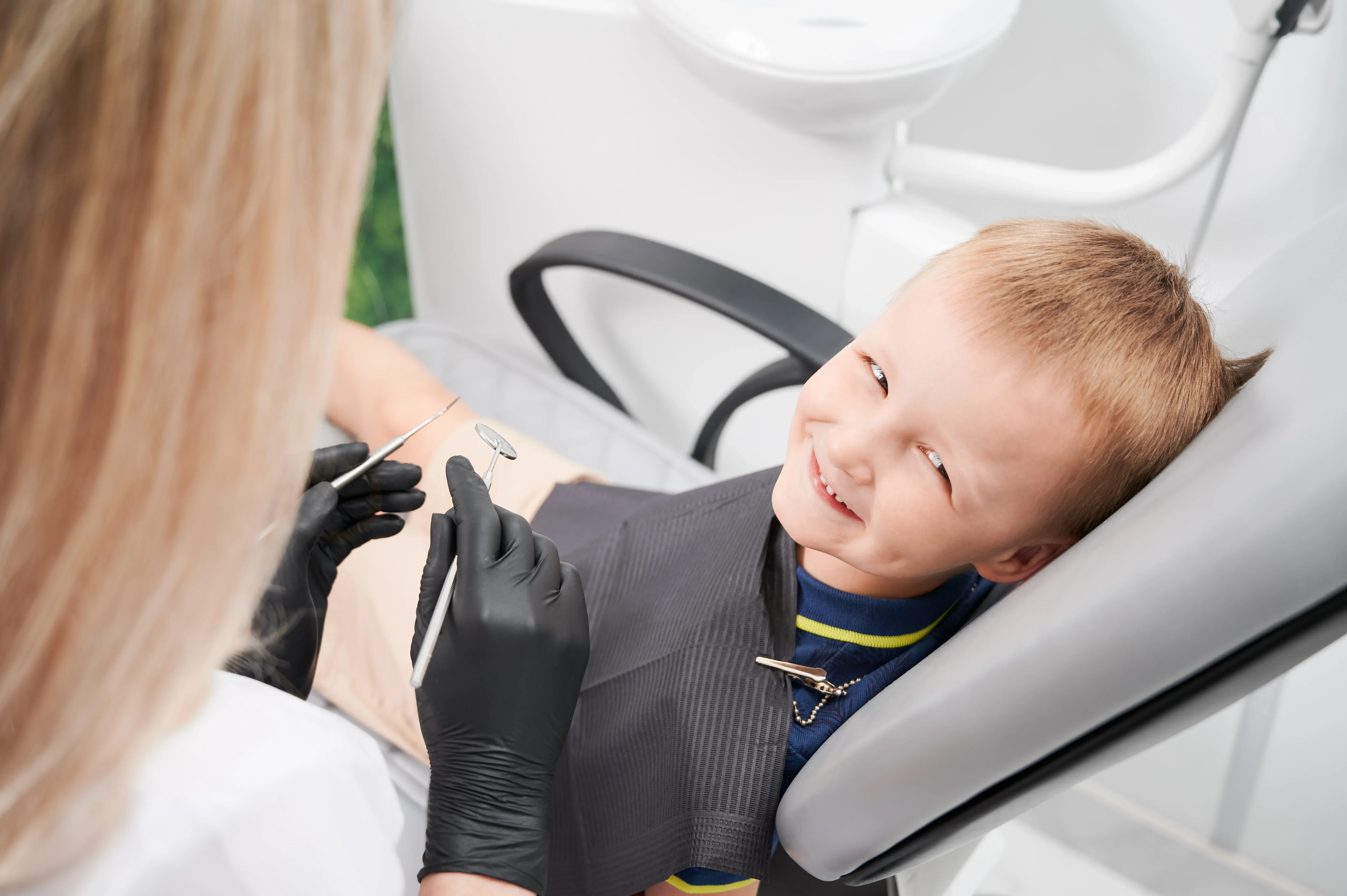
Acclimatization: Your child gets used to the sights, sounds, and smells of the clinic while sitting safely on your lap during a Knee-to-Knee exam.
-
Risk Assessment: The dentist looks for early signs of decay and checks your child’s risk based on their diet and hygiene.
-
Parent Education: This is key. We teach you how to brush a squirming toddler’s teeth, discuss the dangers of night-time bottle feeding, and talk about teething relief.
The "Milk Tooth" Myth
A common myth in children’s dentistry is: “They’re just baby teeth, they’ll fall out anyway. Why fix them?”
This idea is risky. Baby teeth have three important jobs:
-
Eating and Nutrition: A child with painful, rotted teeth cannot chew properly, leading to nutritional deficiencies.
-
Speech Development: Teeth are essential for pronouncing sounds like 't', 'd', 's', and 'l'. Early loss can lead to speech impediments.
-
Space Keepers: This is the most technical job. Baby teeth keep space open for the adult teeth coming in. If a baby tooth is lost too soon, nearby teeth can move into the gap and block the adult tooth, often leading to braces later
If an infection in a baby tooth isn’t treated, it can spread to the developing adult tooth underneath and damage it before it even comes in.
The Pedodontic Approach: Psychology First
Treating children takes more than dental skills. We use a method called “Tell-Show-Do.”
-
Tell: We explain what we are going to do in kid-friendly language. (e.g., "We are going to count your teeth," not "examine.")
-
Show: We let the child see the tools. The air syringe is called “Mr. Wind,” and the suction is “Mr. Thirsty.” We blow air on their hand to show it tickles.
-
Do: Only then do we act.
This helps build trust. We also use positive reinforcement, like stickers, bravery certificates, and praise, to help children feel proud of what they’ve done.
Preventive Treatments: Stopping Decay Before It Starts
Pediatric dentistry is 90% prevention. Our toolkit includes:
-
Fluoride Varnish: Like a vitamin for teeth, it makes enamel stronger against acids.
-
Fissure Sealants: A protective layer painted on the deep grooves of back teeth, where cavities often start. It works like a shield to keep bacteria out.
-
Dietary Counseling: We help you spot hidden sugars in juices, gummy vitamins, and snacks that can cause tooth decay.
Treating the "Ouch": Restorative Care
Despite our best efforts, cavities happen. When they do, we treat them differently from how we treat adults.
-
Compomers: These are colored fillings—blue, pink, or glittery—that release fluoride and make getting a filling more fun for kids.
-
Zirconia Crowns for Kids: If a baby tooth is badly damaged, we use strong, white crowns instead of the old silver ones, so children don’t feel self-conscious.
-
Painless Injection: We use flavored numbing gels and very thin needles, so most children don’t even notice they’ve had a shot.
Special Needs Dentistry
Pedodontists are the main dental care providers for children with physical, intellectual, or emotional disabilities, such as Autism, Down Syndrome, or Cerebral Palsy. We plan each visit to fit the child’s sensory needs, like dimming lights, using weighted blankets, or scheduling shorter, more frequent appointments to reduce stress. Every child deserves a healthy smile and a caring dental home.
Building a Foundation for Life
The dental experiences a child has between ages 2 and 6 shape how they feel about oral health for life. A child who only goes to the dentist when in pain may become an adult who fears dental visits. A child who sees a Pedodontist regularly for fun, preventive care is more likely to grow up seeing the dentist as a health partner.
At İstinye University Dental Hospital, our Pedodontics Department feels more like a wonderland than a clinic. Colorful waiting rooms and ceiling screens with cartoons are just some of the ways we make visits fun. Our specialists do more than treat teeth—they help build confidence in every child, one little smile at a time.